Technical Info
Technical info on CNC jet machining
CNC jet machining is a non-thermal cutting method using abrasive garnet sand and water to cut almost any material. Simple in theory, advanced in practice.
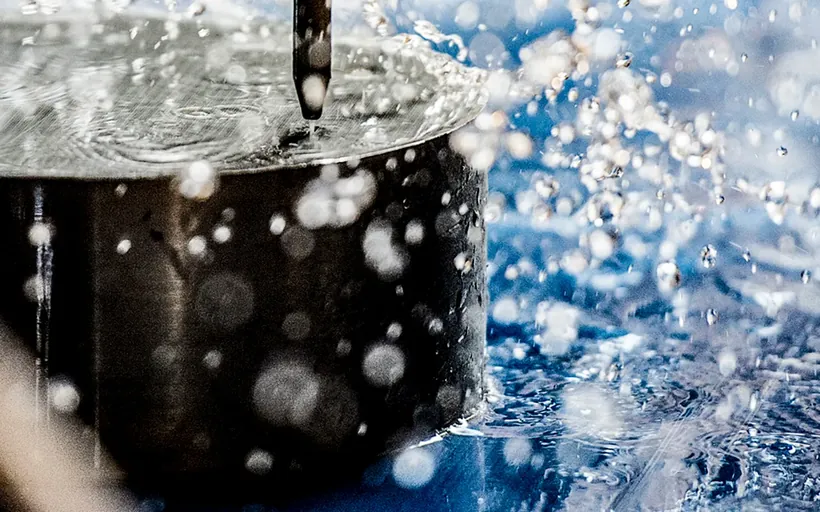
Water-jet cutting
In theory a simple process, in practice an advanced technology
The brittle cutting process gives a satin finish surface with no slag or heat-affected zones, minimising distortion.
Materials can be anything from soft rubber and plastics to composites and metals, ferrous and non-ferrous. A CNC-operated waterjet machine ensures parts within tolerances independent of volumes and with a minimum of waste material. Please note that edge surface and tolerance vary depending on thickness and material type.
How does CNC jet machining work?
Tap water turned into a jet stream
The supersonic water stream cuts all kinds of soft material like plastic, foam, rubber, composites and wood: this is called cold cutting. To increase the cutting power an abrasive medium is added and the water beam turns into high-speed liquid erosion that cuts glass, metal, duplex alloys, tempered steel, tool steel and many more.
- Tap waterIt all starts with ordinary tap water, filtered.
- Ultra high pressurePressurised in an ultra high-pressure pump.
- High-pressure tubingDelivered to the cutting head.
- OrificeA small orifice concentrates the jet: pressure turns into velocity.
- AbrasiveGarnet abrasive is added for metals, glass and hard materials.
- The cutSatin finish, no slag, no heat-affected zone.
Where is CNC jet machining required?
Where waterjet fits beside your other processes
CNC jet machining systems can cut a comprehensive range of materials and thicknesses without thermal impact on the material.
CNC jet machining is ideal for preparation of parts before milling. Cut two-dimensional solids quickly and easily, and you will cut down on production, labour and tooling cost.
When EDM tolerances are not needed, waterjet cutting is a cost-efficient complementary cutting method, with the ability to cut non-conducting materials where EDM cannot.
Why CNC jet machining?
The most competitive once you count everything
When calculating the overall production cost, waterjet has repeatedly come out as the most competitive compared to traditional thermal methods, thanks to nesting efficiency and a low material scrap rate.
Smooth cutting edge
With a precision of 0.1 – 0.3 mm depending on material type and thickness, leaving very little need for additional processing.
No heat-affected zones (HAZ)
With the cold cutting method the material will always keep its characteristics. This also eliminates impact, toxic gases and deformation by slag and dross.
High precision cuts
The water stream cuts between 0.8 and 1 mm wide, allowing it to make cuts up to 120 mm thick.
Versatility
We can cut different materials and complex shapes, from prototypes to mass production, all using the same cutting process.
Not making machining deadlines?
Give us a call and let us see how we can help to cut down the time and effort needed.
